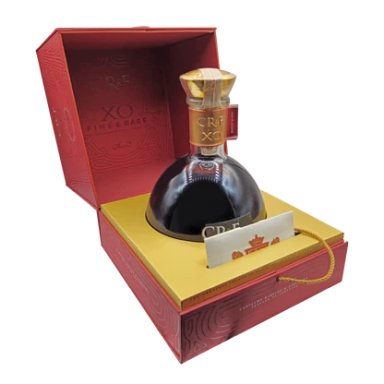
A premium brandy of this winery, belonging to the top of the Portuguese brandy in its category. It has an intense golden colour with amber reflections, the result of prolonged aging in French and national oak barrels. Its clarity and brightness show the quality of the ageing. The nose reveals great complexity and aromatic depth. Elegant notes of dried fruit stand out, particularly walnuts and toasted almonds, surrounded by nuances of vanilla, caramel and spices such as cinnamon and nutmeg. There is also a slight iodized and saline touch, reflecting the region's Atlantic influence. The mouthfeel is silky and balanced, with an unctuous and enveloping texture. The taste profile confirms the aromatic notes, with toasted dried fruit, honey and dark chocolate standing out. The well-integrated acidity gives freshness and prolongs the taste, while the notes of noble wood and spices add structure and sophistication. The finish is long, persistent and harmonious, leaving a feeling of warmth and elegance.
Food pairing
Delicious digestif also delicious with a good cup of coffee. The Portuguese often add this nectar to their espresso.
Aguardente (aguardiente in Spain) is also used in many cocktails such as the Bali Hai (white Rum, Aguardiente, champagne, lime juice, lemon juice, grenadine syrup, Orgede syrup (almond syrup), the Caipirinha (lime cut into pieces, powdered sugar, Aguardiente, ice cubes) or the delicious Ginjinha, a shot of cherry liqueur (Ginja) that will make you walk on your hands and where you need the full width of the road on the way home. You make it through the slightly sour Ginja cherry - in Belgium known as' kriek -, to be mixed with aguardente and sugar.
A premium brandy of this winery, belonging to the top of the Portuguese brandy in its category. It has an intense golden colour with amber reflections, the result of prolonged aging in French and national oak barrels. Its clarity and brightness show the quality of the ageing. The nose reveals great complexity and aromatic depth. Elegant notes of dried fruit stand out, particularly walnuts and toasted almonds, surrounded by nuances of vanilla, caramel and spices such as cinnamon and nutmeg. There is also a slight iodized and saline touch, reflecting the region's Atlantic influence. The mouthfeel is silky and balanced, with an unctuous and enveloping texture. The taste profile confirms the aromatic notes, with toasted dried fruit, honey and dark chocolate standing out. The well-integrated acidity gives freshness and prolongs the taste, while the notes of noble wood and spices add structure and sophistication. The finish is long, persistent and harmonious, leaving a feeling of warmth and elegance.
Food pairing
Delicious digestif also delicious with a good cup of coffee. The Portuguese often add this nectar to their espresso.
Aguardente (aguardiente in Spain) is also used in many cocktails such as the Bali Hai (white Rum, Aguardiente, champagne, lime juice, lemon juice, grenadine syrup, Orgede syrup (almond syrup), the Caipirinha (lime cut into pieces, powdered sugar, Aguardiente, ice cubes) or the delicious Ginjinha, a shot of cherry liqueur (Ginja) that will make you walk on your hands and where you need the full width of the road on the way home. You make it through the slightly sour Ginja cherry - in Belgium known as' kriek -, to be mixed with aguardente and sugar.
Grapes: Distilled wine from Portuguese grapes
Since 1895, Carvalho, Ribeiro & Ferreira has carried the legacy of the best Portuguese brandies. A story that over the years has in its genesis, the sharing of good memories at the table, the experience of more than a century of tradition and the trust that passes from generation to generation. It was a long process of selection of old lots that involved producers from the region and their enormous capacity to revisit and qualify old lots. In these batches, brandies of various ages were selected, the main batch being over 40 years old. This final blend results from the distillation of various brandies from the region's grape varieties, all kept over time in French oak and carefully selected. A batch reinvented over and over again, with continuous team chapters, which emerge in tasting experiences to reach perfection. Each batch will be different, to achieve a unique and unrivaled product, always respecting the aromatic versatility of this terroir.
Alcoholcontent
40 %vol
Store & Serve
Serve at 16°C
Critics & Awards
Aguardente
The spirits in Portugal (Portuguese: Aguardente, derived from água ardente, translated: fiery water) includes alcoholic beverages, usually distilled drinks made from wine, in Portugal. The alcohol percentage is legally limited to 78%. The color can range from clear and colorless to light brown, depending on the maturation in the barrel.
Aguardente Vínica
Brandy must be used for the production of port. It is therefore not surprising that there is a long tradition of distilling wines in Portugal. Most of it is used for the production of port.
Some regions are also known for their good brandies:
Lourinhã is known for its light white wines, with an alcohol content of 10%. These are excellent for distilling. In the past, the wine was double distilled with copper stills, but nowadays it is distilled continuously almost everywhere. In 1992 this region obtained the status of DOC. Besides Cognac, Armagnac and Brandy de Jerez, this is the fourth recognized wine region for brandy production.
In Vinho Verde, the best harvests are used for distilling brandy. It has been officially recognized since 1984. The best brandies are double distilled.
After this, the drink is placed in oak or chestnut barrels. Aguardente Vínica is aged for at least six months, Aguardente (Vínica) Velha for at least one year. But the best brands ripen much longer. Some of the best known producers are Cavipor, Quinta do Tamariz, Ferreirinha, Casa d'Avelleda, Vinhos Campelo and José Maria da Fonseca.
Aguardente Bagaceira
In the Portuguese countryside, the aguardente is traditionally distilled by the local population from the remnants left over after making wine, the Aguardente Bagaceira. The raw materials are distilled in a kettle over a fire. A long tube runs through a large container of warm water and the final product drips from the tube into a jug. The whole is a kind of alembic. In contrast to the distilling of eau de vie in France, where a licensing system has been devised to end home firing in the longer term, in Portugal this practice is still permitted.